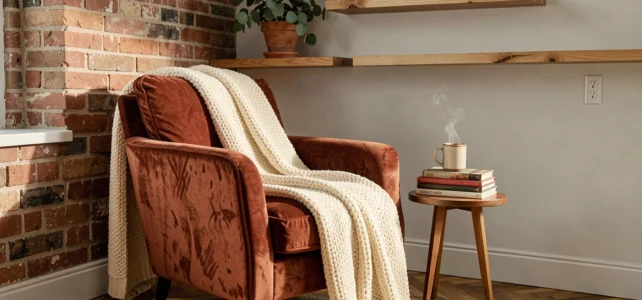
A new sofa, three matching cushions, and a scented candle are not enough to make a room welcoming. We often notice that the interior remains cold because the light falls poorly, because the materials do not interact with each other, or because the space lacks breathing room. Transforming your interior into a warm cocoon requires working on specific levers, not just multiplying accessories.
Layered Lighting: The Foundation of a Warm Atmosphere
Before changing a single piece of furniture, start with the lighting. A room lit by a single central ceiling fixture produces flat and cold light, regardless of the furniture underneath. Layering multiple light sources at different heights radically changes the perception of a living room or bedroom.
See also : The best gourmet inspirations to make all your homemade cakes successful
The principle is simple: combine soft general lighting (dimmer pendant or shaded ceiling light), task lamps placed at seating height (bedside lamp, reading lamp, coffee table lamp), and floor or indirect sources (string lights, LED strips behind furniture). This creates areas of shadow and light that give depth to the room.
The choice of the color temperature of the bulbs is as important as their position. Bulbs around 2700 to 3000 K produce a golden light similar to that of a candle. Beyond that, the rendering leans towards clinical white. For those looking to deepen their choices regarding interior design and decor, Home Dream offers useful resources on the subject.
Related reading : Discover the main printing techniques to easily customize your clothing

Earthy Color Palette for a Cocooning Living Room
Decor guides consistently mention beige and light wood. We can go further. Recent palettes incorporate darker and deeper tones: burgundy, forest green, rich taupe. These shades envelop the room without darkening it, as long as they are used in moderation.
In practice, reserve deep colors for one wall, a sofa, or a large rug. The rest of the room should remain in neutral tones (off-white, linen, sand) to avoid a cave effect. A common mistake is to paint all four walls in terracotta: the living room then appears smaller, and the atmosphere becomes stifling instead of enveloping.
Test Before Painting
Opinions vary on this point, but applying a sample directly to the wall (not on a piece of cardboard) and observing it at different times of the day helps avoid unpleasant surprises. A warm shade in the morning can turn grayish under poorly calibrated artificial lighting in the evening.
Natural Materials and Textiles: Comfort You Can Feel
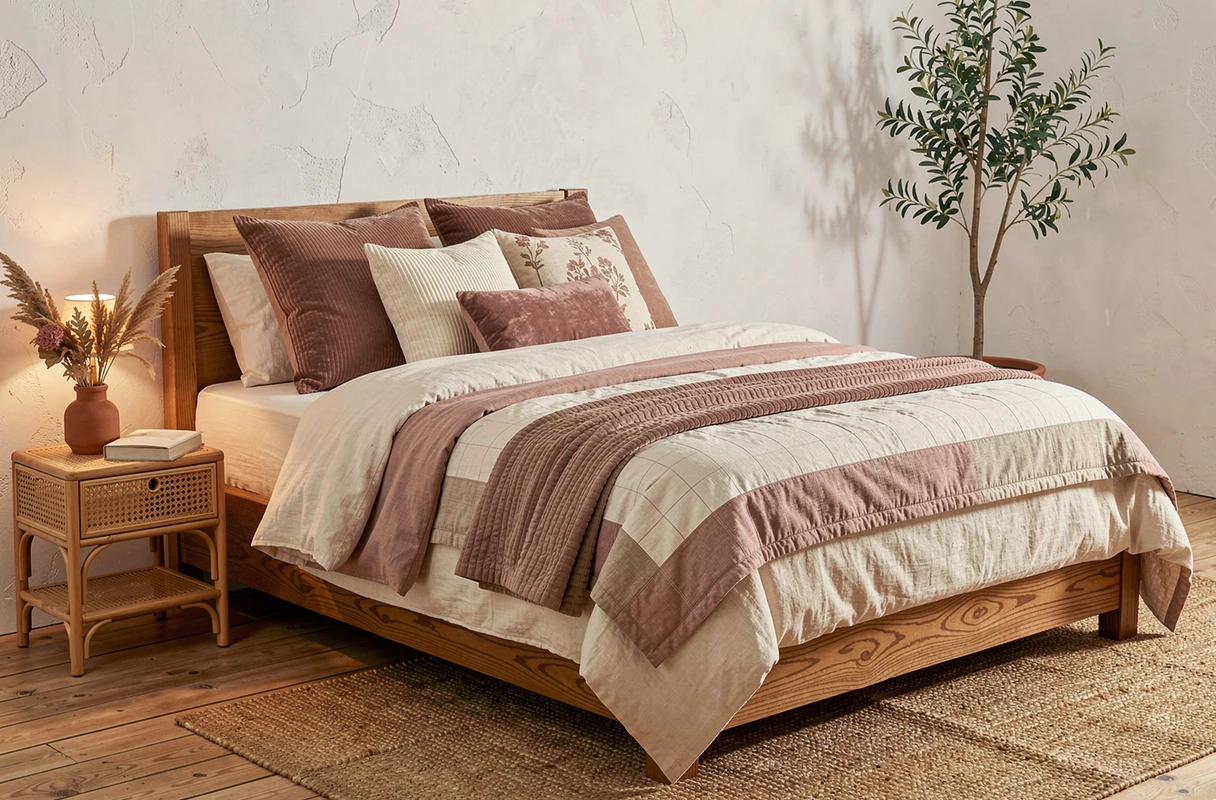
A warm interior is also recognized by touch. Wood, linen, wool, and rattan each bring a different texture. Varying materials in the same room creates a sensory richness that a completely smooth decor does not provide.
Here are the combinations that work well in both living rooms and bedrooms:
- A thick wool blanket placed on a structured fabric sofa (boucle, corduroy) to contrast textures without visually overwhelming.
- A coffee table made of raw wood or rattan paired with a jute or wool rug, which anchors the living area to the floor and absorbs sound.
- Washed linen cushions mixed with one or two velvet cushions, limiting patterns to a single type for consistency.
Accumulation remains the main trap. Three well-chosen materials are better than seven layered on top of each other. We seek a cocoon effect, not a visual mess.
Circulation and Space: A Cocoon That Breathes
“Cocooning” is often associated with “filling the room.” The result, in practice, is a living room where you bump into the coffee table and where the armchairs block the passage. A warm interior needs clear spaces between furniture so that the room remains pleasant to live in, not just to look at.
Some concrete guidelines:
- Leave enough space between the sofa and the coffee table to sit and stand up without contorting.
- Create a conversation area by bringing seating (sofa, armchair, pouf) closer together rather than pushing them against the walls, which gives a waiting room effect.
- Prefer closed storage (buffet, dresser, TV unit with doors) to reduce the visual noise of accumulated objects.
This approach aligns with what is sometimes called warm minimalism: few well-placed pieces of furniture, made of materials that warm the space. Keep a blanket, remove the three empty decorative baskets that serve no purpose.
Sensory Dimension Beyond the Visual
A warm cocoon is not limited to what we see. Recent decor content increasingly incorporates the multi-sensory dimension to complement the layout.
Scented candles, oil diffusers, or simply the smell of natural wood contribute to the atmosphere. You don’t need them in every room: one diffusion point in the living room and possibly one in the bedroom is sufficient. Too many simultaneous scents produce the opposite effect, a saturation that is tiring.
Sound also plays an underestimated role. A thick rug, heavy curtains, cushions: all these textile elements absorb reverberation. A room where sound does not echo immediately feels more intimate, even without changing a single piece of furniture.
Transforming your interior into a warm cocoon ultimately involves three areas of focus: lighting, materials, and free space. The rest (candles, decor, accessories) serves to complement, not compensate. A well-lit living room with a comfortable sofa and a rug on the floor will always feel more like a cocoon than a room overloaded with objects under a harsh white neon light.