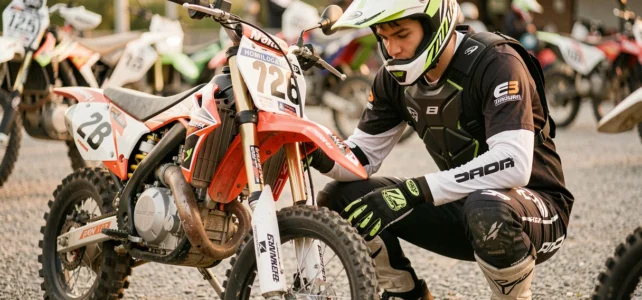
A homologated 125cc motocross bike is not a competition cross equipped with a lighting kit. The term encompasses machines designed from the outset for road use, with registration papers, headlights, turn signals, and a license plate.
Confusing the two leads to inappropriate purchases, sometimes non-compliant with regulations. The market mixes models oriented towards recreational enduro, sport-oriented enduros, and second-hand machines whose homologation remains unclear. Knowing what you are actually buying determines satisfaction in use as much as legality on public roads.
You may also like : Who can benefit from the Prado system of Health Insurance and how to take advantage of it?
Homologated 125cc Cross: What This Designation Really Covers
A classic motocross bike lacks any road equipment. It has no compliant lighting, mirrors, or signaling devices. Adding these elements afterward does not suffice to obtain valid homologation.
Models sold as “homologated 125cc cross” are actually 125cc road homologated enduros, built with a frame and chassis similar to cross bikes but originally equipped for circulation. The registration document then mentions the type “MTL” (light motorcycle) or “CL” depending on the case, and the vehicle meets current emission standards.
Recommended read : How to Choose the Ideal Removable Cat Flap for a Rental Patio Door?
This distinction has direct consequences. A non-homologated cross bought for mixed road-off-road use cannot be legally registered. Field reports show that this trap regularly affects beginner buyers, attracted by a lower price without verifying the administrative status of the machine. To learn everything about the homologated 125cc cross, it is essential to first clarify this boundary between pure cross and homologated enduro.
Administrative and Mechanical Consistency: The Real Filter Before Purchase
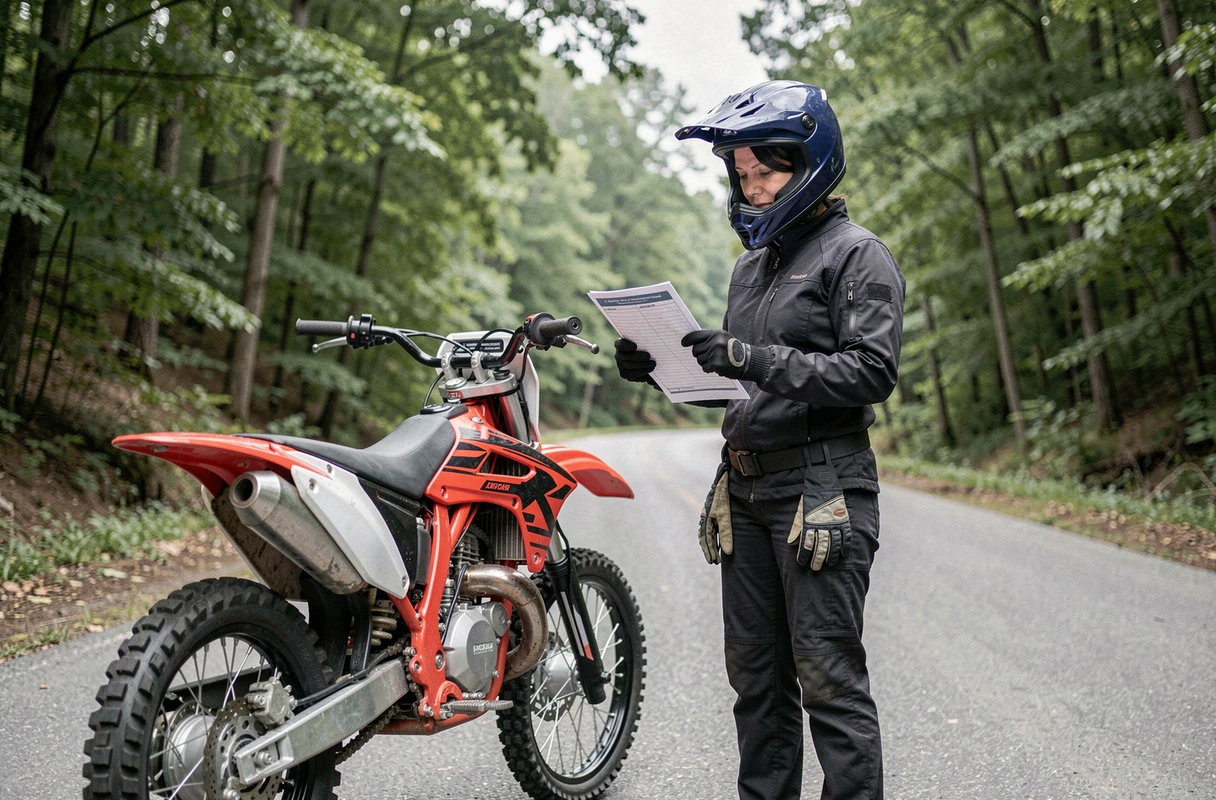
Before focusing on the engine or suspensions, the priority in the second-hand market is to check the consistency between the registration document, frame number, and actual condition of the motorcycle. There are makeshift machines circulating, with exchanged frames, engines replaced without declaration, or non-existent maintenance histories.
Key Inspection Points Not to Overlook
- The frame number engraved on the steering column must exactly match the one on the registration document. Any discrepancy signals a potentially blocking administrative issue.
- The cold and hot condition of the engine should be tested separately: a difficult cold start may mask a segmentation or gasket problem, while abnormal behavior when hot reveals other wear.
- Signs of falls (bent levers, scratched footpegs, dented tank) are not disqualifying in themselves, but they must be consistent with the announced mileage and the asking price.
- The maintenance history, even partial, remains a reliable indicator: oil change invoices, chain or sprocket replacement, suspension servicing.
These checks take about twenty minutes and prevent situations where the buyer discovers afterward that the motorcycle cannot be re-registered or that the engine requires heavy repairs.
Ergonomics and Seat Height: An Underestimated Criterion on 125s
Competitors emphasize engine displacement and power. However, real ergonomics matter as much as engine specifications for regular use, especially for beginners. The seat height of homologated 125cc enduros varies significantly from one model to another, and this difference radically changes the rider’s confidence when putting a foot on the ground.
A rider who cannot comfortably touch the ground when stopped will compensate with tension that increases fatigue and the risk of falling at low speeds. Field feedback varies on this point: some believe that one adapts quickly, while others feel that a seat that is too high discourages long-term.
The riding position (handlebars, footpegs, torso angle) deserves a real test. Two models of the same displacement can offer very different sensations depending on the rider’s morphology. Brands like KTM, Yamaha, or Honda offer distinct geometries, and a test ride at the dealership remains the only reliable way to decide.
Total Cost of a Homologated 125: Beyond the Purchase Price
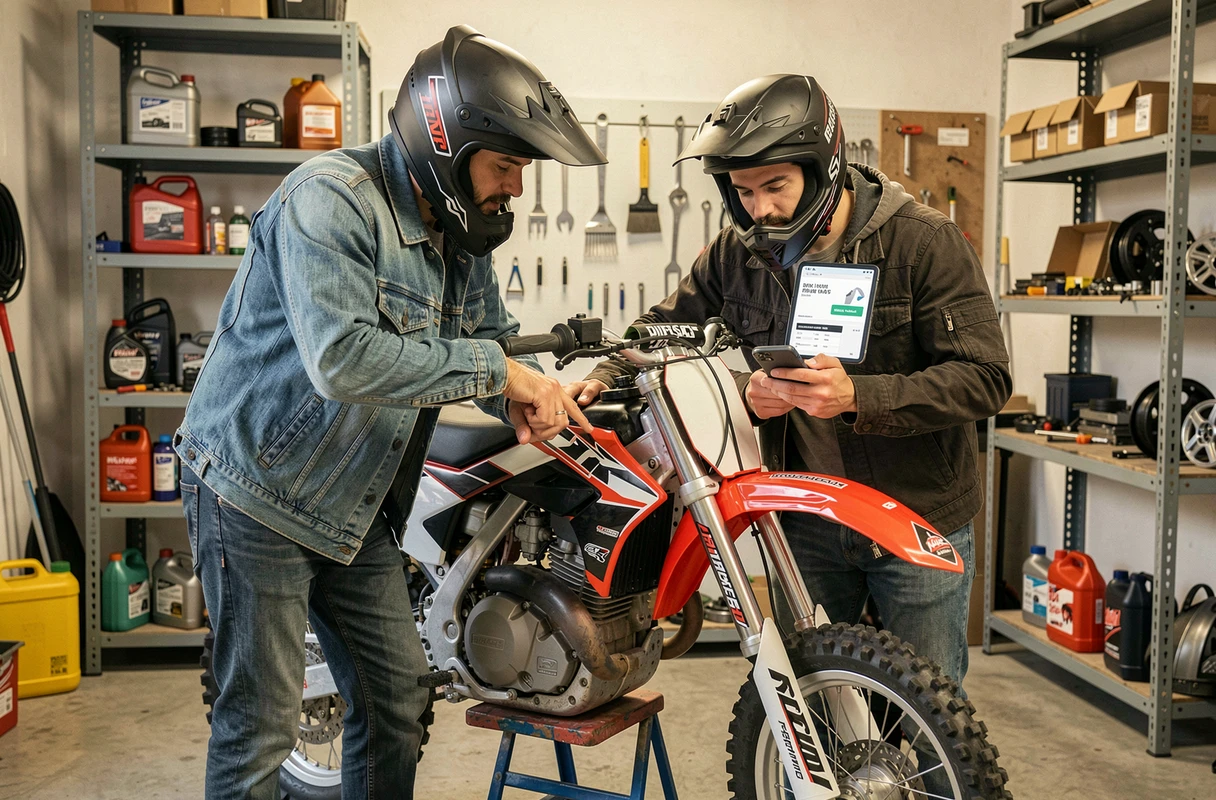
The displayed price of a homologated 125cc motocross bike, whether new or used, represents only a fraction of the actual budget. Several factors add up and sometimes alter the ranking between an “affordable” model and a seemingly more expensive one.
Availability of Parts and Maintenance Network
The ease of finding consumables (filters, pads, tires, chain) and engine parts conditions both the cost of use and downtime. A model whose parts require ordering from abroad with several weeks of delay becomes quickly frustrating. Major Japanese brands (Honda, Yamaha) and European ones (KTM) generally have a dense distribution network. For less common brands, the cost of parts and their delivery time should be verified before purchase.
Routine Maintenance and Upkeep
On a used 125, the first service after purchase often includes a complete oil change, chain and transmission kit replacement, brake bleeding, and suspension check. This item can represent a significant amount that adds to the purchase price.
Parts that wear out specific to off-road use (knobby tires, frame protections, levers) are replaced more frequently than in pure road use. A realistic annual maintenance budget incorporates these regular renewals, not to mention the mandatory insurance for any homologated 125 circulating on the road.
Two-Stroke or Four-Stroke Engine on a Homologated 125 Cross
The choice between a two-stroke and a four-stroke engine remains fundamental. A two-stroke offers a favorable power-to-weight ratio and simpler mechanics, but its maintenance (oil-gas mix, more frequent piston replacement) requires particular diligence. The available data does not allow concluding that one type of engine is objectively superior for a beginner: it depends on the terrain practiced and the rider’s affinity for mechanics.
A four-stroke delivers a more linear power, easier to modulate in technical passages. Its maintenance follows more conventional intervals (oil changes, valves). However, at equal displacement, it is generally heavier. The four-stroke is better suited for mixed road and trail use, while the two-stroke remains favored for competitive off-road use.
The choice of a homologated 125cc motocross bike relies less on an ideal technical sheet than on the suitability between the model, the intended use, and the overall budget. Checking the administrative status, testing the bike in real conditions, and anticipating maintenance costs effectively filters out unpleasant surprises. A well-chosen machine based on these criteria will serve for several seasons without frustration.