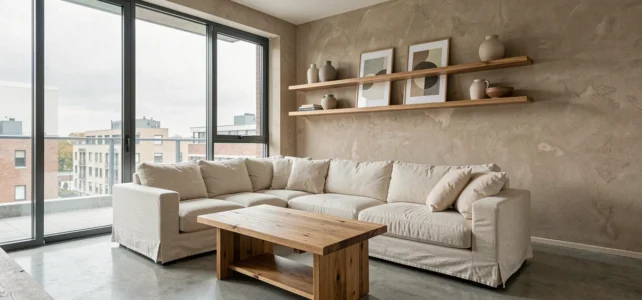
A contemporary interior design project is not just about choosing a sofa and repainting a wall. Every decision, from the flooring to the height of a light fixture, alters how you experience a space on a daily basis. To ensure the result lasts, it’s better to establish some solid foundations before placing an order.
Proportions and circulation: the foundation of a successful interior layout
You may have noticed that a living room can feel cramped even though it has the same square footage as another that seems spacious? The difference rarely lies in the square meters. It comes from how the furniture is positioned in relation to openings and pathways.
Further reading : Tips and Inspirations for Stylishly Decorating and Furnishing Your Home
Before choosing a piece of furniture, draw on a plan the routes you take most often: entrance to kitchen, kitchen to table, sofa to window. A clearance of at least 80 cm on each circulation axis avoids the feeling of a permanent obstacle. This simple guideline changes the perception of a room much more than a color change.
Also consider the proportion between low and high furniture. A room saturated with high storage overwhelms the eye. Conversely, concentrating everything on the floor wastes useful volume. The balance is found by reserving high storage for the walls least exposed to natural light, so as not to block the daylight in the room. Recent projects showcased on nouveau-rivage.com illustrate this logic of articulation between low volumes and vertical lines well.
You may also like : Tips and Tricks for Successful Renovation and Interior Decoration Projects

Contemporary materials and finishes: dark wood, chrome, and expressive textures
The contemporary style has long been associated with light oak and neutral tones. Recent trends mark a clear shift.
Dark wood is making a comeback as a counterpoint to the Scandinavian style that has dominated for several years. Walnut, ebony-stained oak, or wenge add depth without weighing down the space, provided they are paired with light matte surfaces (mineral plaster, polished concrete, raw linen).
Chrome is also returning in seating structures, light fixtures, and furniture details. Paired with rich textiles (corduroy, boucle wool), it creates a contrast between metallic coldness and tactile warmth that well defines the current contemporary vocabulary.
Combining finishes without overloading
A practical rule for maintaining coherence: limit yourself to three main finishes per room. For example, a gray polished concrete floor, walnut furniture, and textured fabric seating. Any additional elements (marble, brass, ceramics) risk fragmenting the visual reading of the space.
Why three and not four? Because the eye needs stable reference points to perceive a space as harmonious. Beyond three dominant materials, each surface competes with the others, and the whole loses its readability.
Discreet home automation and adaptive lighting in a contemporary interior
Technology in contemporary living spaces follows a clear trend: to be present without being visible. Visible switches, wall boxes, and exposed cables give way to systems integrated into walls or furniture.
Adaptive lighting is the most concrete example of this. Fixtures automatically adjust their color temperature and intensity according to incoming natural light. In the morning, the light leans towards cool white to accompany waking. In the evening, it shifts to warm tones without manual intervention.
Integrating technology without distorting decoration
A common mistake is to add connected devices afterward, like a smart thermostat placed on a wall with textured plaster. The result disrupts the decorative intention.
- Plan technical placements from the design phase: recessed outlets behind furniture, cable passages in baseboards or false ceilings.
- Favor pull-out columns in kitchens and motorized storage in closets to conceal appliances and wiring.
- Opt for air and energy detectors integrated into ventilation grilles rather than surface-mounted sensors.
This approach requires a bit more upfront planning, but it preserves the clean lines that characterize a contemporary interior.
Colors and ambiance: building a coherent palette for your project
The choice of colors often comes too early in a project. Many people select a wall shade before even defining the flooring or furniture. The result: a color that seemed perfect on a swatch but clashes with the rest.
Always start from the most constrained element: the flooring, a pre-installed countertop, or a piece of furniture you are keeping. This fixed element becomes your anchor point. The wall palette and textiles then adjust around it.
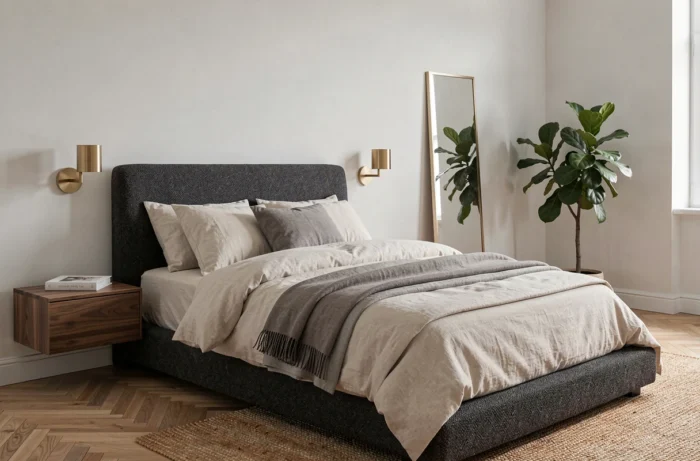
For a contemporary interior, earthy tones (clay, sand, taupe) work well as a neutral base. They pair nicely with both dark wood and chrome. A single bolder accent color (sage green, midnight blue, deep terracotta) is enough to add character without throwing off the balance.
Testing colors in real conditions
Always apply a sample directly on the relevant wall, not on a white cardboard. Observe it at three times of the day: morning, noon, evening under artificial light. The same shade can appear cool in the morning and warm in the evening, which radically changes the perceived ambiance.
Keep the sample in place for at least 48 hours before making a decision. The first impression is often misleading, especially for dark shades that gain presence over time.
A successful contemporary interior layout relies less on spectacular purchases than on early technical decisions: circulation, material proportions, discreet integration of technology, and a palette built from the floor up. Once these choices are settled, they leave plenty of freedom for decorative details that truly personalize a space.