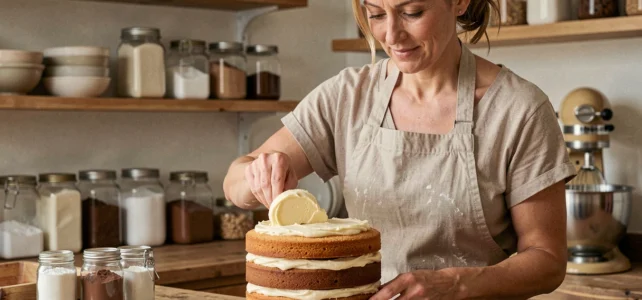
A yogurt cake can be compact and dry, or airy and melting, depending on how one balances three parameters: fat, eggs, and flour. Before choosing a homemade cake recipe, the real question is what texture you are aiming for. A soft cake for children’s snacks is not built the same way as a chocolate fondant intended for a dessert at the end of a meal.
Choosing your homemade cake base according to the desired texture
Most websites offer lists of recipes categorized by ingredient or difficulty. This approach overlooks a more useful point: the final texture depends on the ratio of fat, eggs, and flour.
Related reading : The best ideas to transform your interior into a true warm cocoon
A family cake relies on an equal balance of butter, sugar, flour, and eggs. The result is dense, cuts well, and transports easily. It is the ideal base for a snack or a picnic.
A soft cake, on the other hand, contains more eggs and often a moist ingredient (yogurt, cream, applesauce). The crumb remains tender for several days. This type of base is found in yogurt or fruit cakes.
You may also like : Discover the main printing techniques to easily customize your clothing
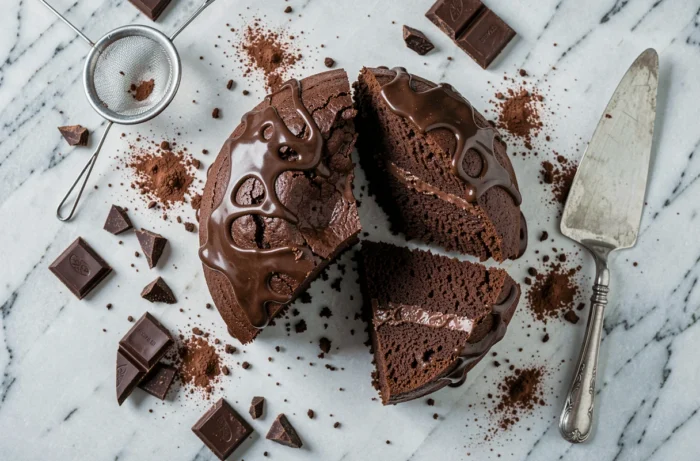
A chocolate fondant operates on a completely different level: a lot of butter, little flour, and a short baking time. The center remains creamy. Have you ever noticed that an overcooked fondant becomes just a simple chocolate cake? It is the baking, not the recipe, that makes the difference between the two.
To go further in flavor combinations and find bases suitable for each occasion, you can discover the Idées Gâteaux website which details these approaches by type of result.
Adapting cake ingredients without changing the recipe
A recent trend in homemade baking is to modify one or two ingredients to lighten a cake while keeping its structure. The principle is simple: replace one component with an equivalent that plays the same technical role.
Replacing butter
Applesauce provides the moisture and binding of butter, with a fraction of the fat. In a fruit cake or chocolate cake, this substitution works well because the taste of the applesauce remains discreet.
Low-fat cottage cheese plays a similar role. It adds moisture without weighing down the batter. It is a particularly suitable substitute for lemon or vanilla cakes.
Reducing sugar without losing texture
Sugar serves not only to sweeten: it retains moisture and contributes to the browning of the crust. If you halve the amount, the cake will be paler and dry out faster. An intermediate solution is to replace part of the sugar with applesauce or a mashed ripe banana, which provide both natural sugar and water.
Playing with the number of eggs
An extra egg compared to the original recipe makes the crumb airier. Conversely, removing a yolk (while keeping the white) lightens the structure without sacrificing stability. Why this choice? Because the yolk provides fat and the white provides structure. Adjusting the yolk/white ratio directly modifies the lightness of the result.
Pairing flavors in a homemade cake: beyond chocolate and vanilla
Homemade cake recipes often revolve around the same combinations. Chocolate, vanilla, lemon: these classics work, but the choice of flavor can transform an ordinary dessert into something more memorable.
Flavor combinations are thought of in two levels: the base (chocolate, caramel, fruits, spices) and the accent (a zest, a spice, an extract that enhances the whole).
- A pistachio cake gains depth with a touch of orange blossom water in the batter. Pistachio alone remains quite flat on the palate; the orange blossom water opens up the flavor.
- A salted butter caramel cake becomes more complex with a hint of vanilla in the cream. Caramel alone can saturate the palate; vanilla adds a roundness that balances it.
- A dessert with red fruits (raspberry, strawberry) pairs well with dark chocolate. The acidity of the fruits and the bitterness of the chocolate complement each other without masking.
- A citrus cake (lime, orange) pairs very well with poppy seeds or freshly grated ginger, which adds a slight warmth at the finish.
These combinations do not require any particular technique. Just add the accent to the batter before baking, in small quantities, and taste.
Transitioning from a family cake to a decorative cake with minimal equipment
Cake design impresses on social media, but most spectacular finishes rely on accessible techniques. A mirror glaze or a simple icing visually transforms a basic cake.
The simplest chocolate glaze is made with melted dark chocolate and a bit of hot liquid cream. It is poured over the cooled cake placed on a rack, and gravity does the work. The result is smooth and shiny without a piping bag or offset spatula.
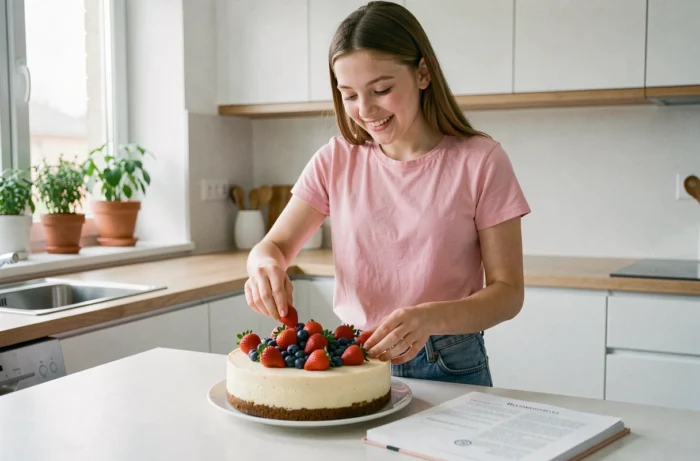
For a “naked” effect, simply stack two layers of soft cake with whipped cream or sweetened cream cheese in between, without covering the sides. The contrast between the visible crumb and the filling creates an elegant look with zero decoration skills.
A final point often overlooked: a clean cut depends on the temperature of the cake. A cake cut while warm crumbles. Wait until it is completely cool, and use a knife run under hot water and wiped between each slice.
The success of a homemade cake does not depend on the number of recipes consulted, but on the understanding of what happens in the batter. The same basic mixture, adjusted in fat, eggs, or baking, produces radically different results. Starting by choosing the texture before choosing the recipe saves time and avoids disappointments when it comes out of the oven.