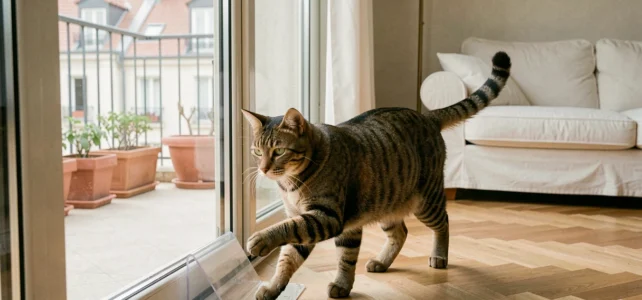
A removable cat flap for a patio door refers to a device that allows a cat to pass through without drilling, cutting, or permanently modifying the housing’s carpentry. In rental situations, this reversibility constraint influences everything else: the type of support, the method of attachment, and the level of thermal insulation that can be expected to be maintained.
Invisible marks and returning the property: what is truly reversible
The promise of a “no drilling” system does not guarantee the complete absence of marks at the end of the lease. Two categories of marks often go unnoticed during the initial inspection but become apparent upon return.
You may also like : How to Choose the Right Homologated 125cc Dirt Bike: Essential Tips and Criteria
Residues of sealant or silicone caulk, even when removed with a cutter, leave a greasy film on PVC or aluminum. Generally, cleaning with isopropyl alcohol is sufficient, but on an aged white profile, the cleaned area may appear lighter than the rest of the frame.
Micro-scratches caused by the repeated friction of the panel against the rail of the sliding door are another point of concern. A self-adhesive felt on the edges of the panel minimizes this risk. A custom removable panel reduces friction compared to an adjustable telescopic model, whose extensions vibrate in the wind and create gaps.
You may also like : Scholl or Birkenstock: how to choose between these two iconic brands?
Before any installation, photographing the rail and the frame with side lighting helps document the initial condition. This simple reflex protects against unjustified deductions from the security deposit. To explore solutions suitable for rentals, the removable panel with integrated cat flap on Oh Brico details models compatible with furnished leases.
Custom panel or adjustable telescopic panel: comparison for sliding glass doors
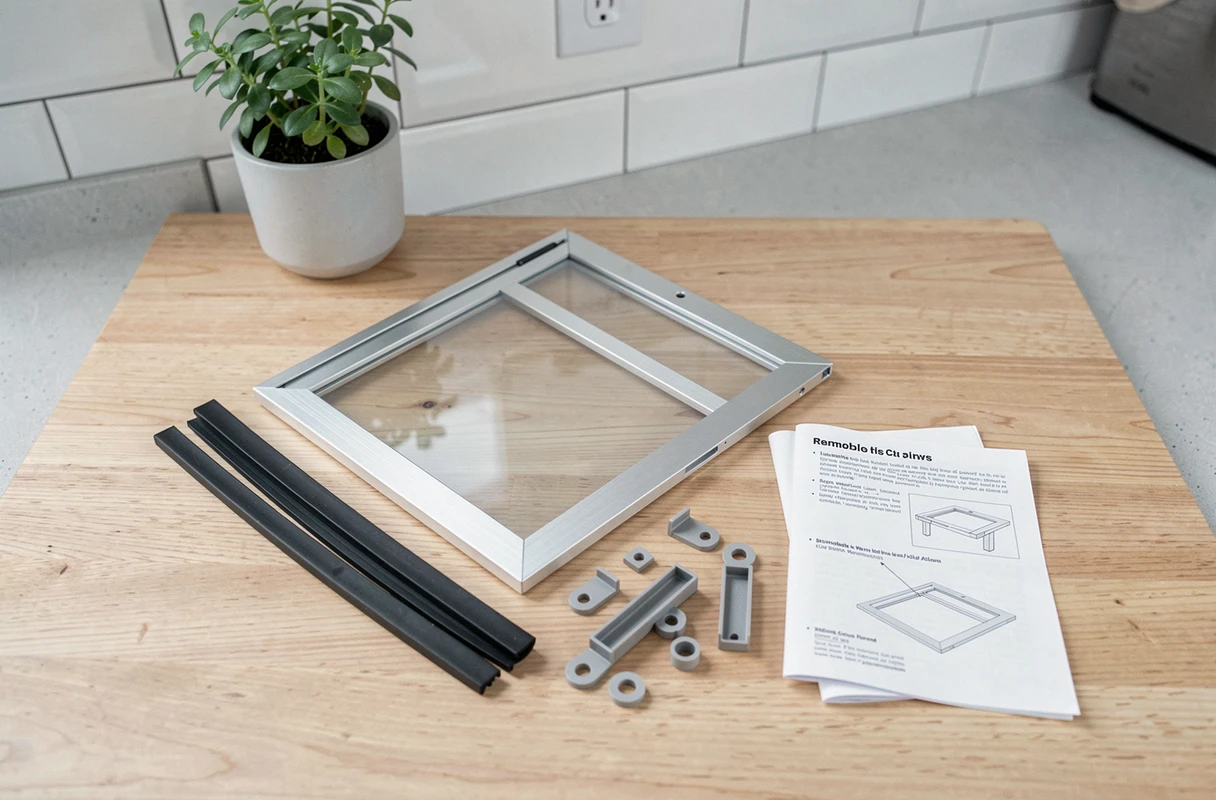
The panel slides into the rail of the sliding patio door, replacing the open leaf. Two formats coexist, with notable differences in insulation and stability.
Custom panel
Cut to the exact dimensions of the opening, it fits the rail without lateral play. The sealing relies on a double peripheral seal that blocks air infiltration and sound vibrations. The material (polycarbonate, PMMA, or sandwich panel) is chosen based on sun exposure and the desired level of insulation.
Adjustable telescopic panel
Less expensive, it adapts to a range of widths through sliding extensions. Feedback indicates that these extensions can create gaps, vibrate in the wind, and compromise sealing. On a bay exposed to prevailing winds, the slamming of the panel can quickly become bothersome.
The custom option remains the most reliable choice for long-term rentals, as it limits damage to the rail and facilitates a clean removal.
Thermal insulation and cat flap: limiting heat loss in winter
Installing a cat flap, even a removable one, creates a thermal weak point. The flap itself, often a simple plastic flap, offers negligible thermal resistance compared to the glazing it partially replaces.
Three parameters help contain heat loss:
- The double-leaf flap with a brush seal reduces the passage of cold air compared to a simple free flap. Ensure that the brushes cover the entire perimeter of the opening, including the lower threshold.
- The supporting panel itself must provide sufficient thickness. A honeycomb polycarbonate insulates more than a solid sheet of the same thickness, thanks to the trapped air layer.
- Sealing the panel in the rail, with repositionable sealant or high-density foam seal, prevents peripheral drafts. Some feedback recommends not waiting for the first winter to correct leaks: testing them with an incense stick right after installation allows immediate identification of weak points.
In summer, the same panel can create a greenhouse effect if the polycarbonate is clear. An opaque or tinted version limits overheating without blocking natural light at ground level, where the cat moves.
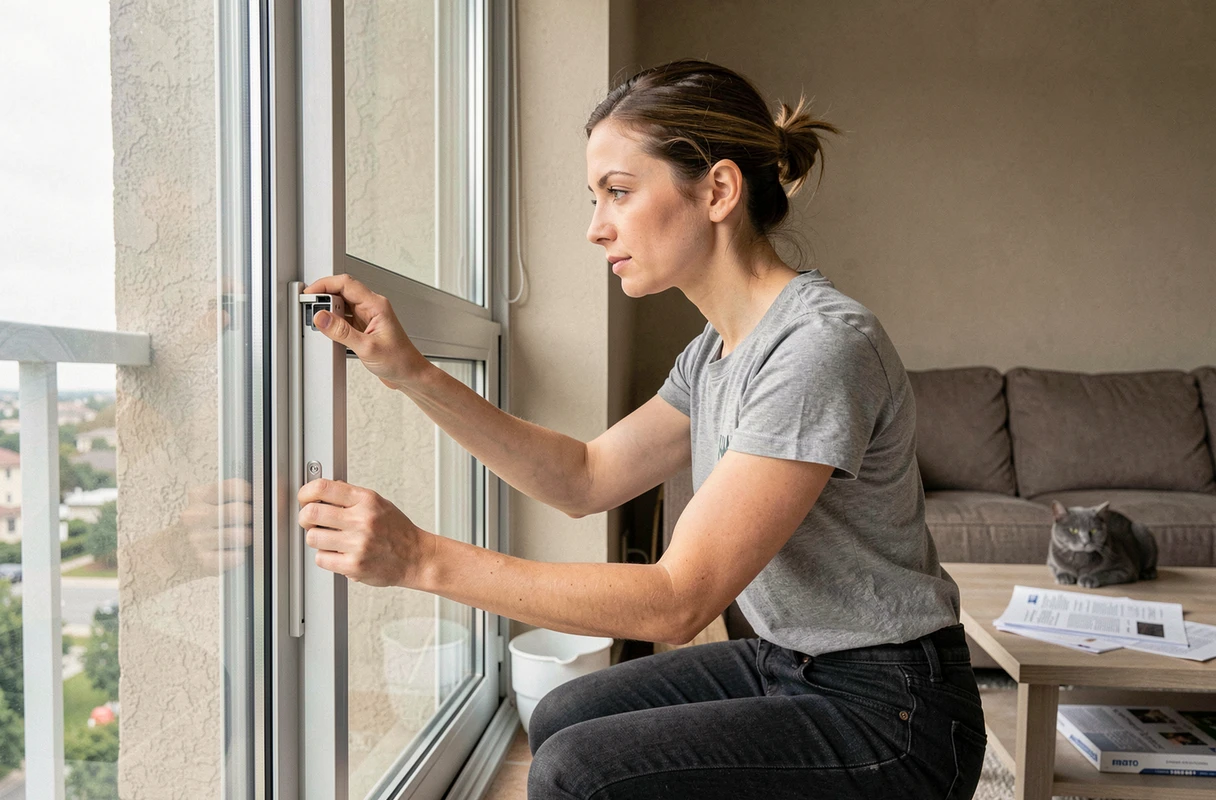
Sizing the cat flap according to your cat: beyond weight
Most guides limit themselves to the animal’s weight to recommend a flap size. This criterion alone is not sufficient. The shoulder width and height at the withers determine the comfort of passage much more than weight.
An average-sized cat but with a broad chest (like a British Shorthair) may struggle with a standard flap, while a longer, heavier cat (like a Siamese) passes through without difficulty. Measuring the cat standing, from the ground to the top of the shoulder, then adding a few centimeters of margin gives the minimum height of the opening.
The width is measured at the widest point of the chest, including the front legs, with the same margin. An opening that is too tight leads to refusal of use: the cat perceives lateral friction as a constraint and prefers to meow in front of the door.
Security and locking in rentals
A model with four positions (open, closed, entry only, exit only) allows blocking access at night without removing the panel. For ground floors, the issue of animal intrusion arises: a microchip recognition system prevents neighboring cats from entering but increases the thickness of the mechanism and thus the bulk in the panel.
Ensuring that the lock of the cat flap does not weaken the anti-burglary security of the sliding door is a point to discuss with the landlord. A removable panel does not replace the original leaf in terms of strength, and leaving the bay slightly open at night with a simple polycarbonate panel does not constitute locking in the sense of home insurance.
The choice of a removable cat flap for a rental patio door ultimately hinges on three concrete decisions: custom or telescopic, simple flap or electronic chip, honeycomb polycarbonate or solid. The most structuring decision remains that of the panel itself, as it determines both the level of insulation, stability against the wind, and ease of clean return at the end of the lease.