
A project manager deploying an internal chatbot in 2026 is no longer just wondering which AI model to choose. They must check if their system falls into the “high-risk” category of the European AI Act and ensure that the cloud provider meets sovereignty requirements. High-tech trends are no longer just a list of gadgets showcased at CES. They involve choices about architecture, compliance, and daily use.
AI Act and Omnibus package: the regulatory timeline that conditions everything else
Technological innovation is often discussed without mentioning the legal framework that constrains it. The European AI Act, which came into effect on August 1, 2024, applies in successive phases. The heaviest obligations, those concerning high-risk AI systems and large generative models, were initially set to apply by August 2, 2026.
See also : Who can benefit from the Prado system of Health Insurance and how to take advantage of it?
The so-called “AI Omnibus” package, adopted in 2025-2026, reopened the text to simplify and adjust these obligations. Several provisions are now sliding towards the end of 2027 and 2028 when AI is embedded in regulated products. Following the regulatory agenda is as strategic as keeping up with announcements from CES.
For tech teams, this means that every new deployment of artificial intelligence must integrate active legal monitoring. You can discover the Athlon News site to follow these technological developments as they unfold, but direct reading of European texts remains essential for compliance teams.
See also : The Latest Scientific Advances Explained Simply to Better Understand Our World
AI agents in business: what concrete deployments change in 2026
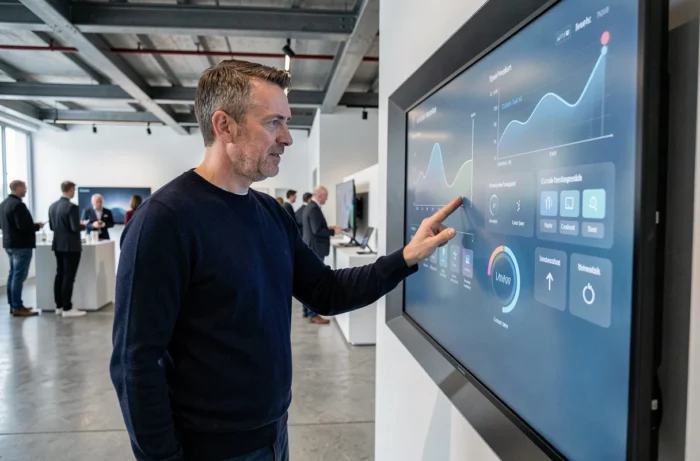
AI agents are no longer laboratory prototypes. They handle predictive maintenance tasks, supply chain management, and customer support without constant human supervision. The difference from a simple chatbot lies in their logical reasoning ability: they can chain multiple steps, consult databases, and trigger actions.
Agentification transforms generative AI into an operational tool, not just a conversational one. In the field, feedback varies on this point: some SMEs see rapid productivity gains, while others struggle to structure their data upstream, which blocks deployment.
Three criteria differentiate a viable AI agent deployment from a stagnating project:
- The quality of input data, which determines the reliability of automated decisions. Without structured and up-to-date data, the agent produces inconsistent results.
- The scope of autonomy defined from the start: an agent managing supplier follow-ups does not need the same rights as an agent overseeing a production schedule.
- The human supervision loop, even if streamlined, which remains necessary for decisions with significant financial or regulatory impact.
Advanced AI technologies are only as valuable as the rigor of their integration. A poorly framed agent creates more problems than it solves.
Cybersecurity and generative AI: the dual face of innovations in 2026
Generative AI simultaneously enhances attack and defense capabilities. Predictive cybersecurity systems use behavioral analysis to detect threats before they materialize. At the same time, attackers exploit the same technologies to design more credible phishing campaigns and polymorphic malware.
The attack surface has widened with widespread remote work. Personal connected devices, home networks, and cloud applications multiply entry points. For security teams, the priority is no longer just to protect a network perimeter but to continuously monitor hundreds of dispersed endpoints.
Post-quantum cybersecurity innovations are also beginning to move beyond the theoretical stage. The idea is to prepare current encryption systems to withstand future quantum computers capable of breaking classical protocols. Anticipating the quantum threat now avoids an emergency migration in five years.
Augmented reality and connected devices: beyond the gadget
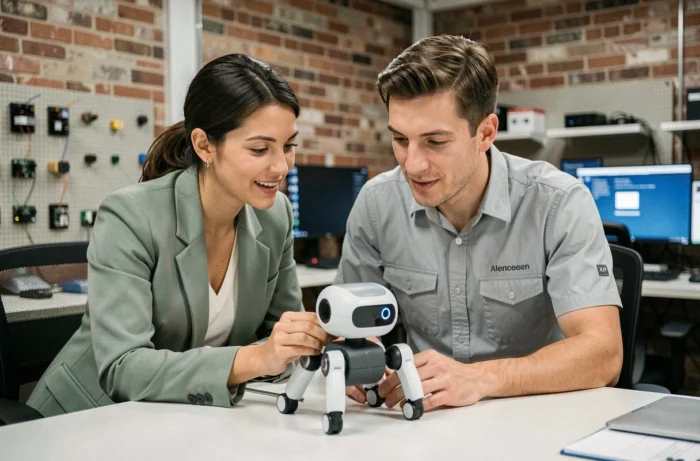
Augmented reality experiences in professional environments have reached a new level. Natural interfaces, which combine gesture recognition, eye tracking, and haptic feedback, allow a maintenance technician to interact with a 3D diagram superimposed on real equipment without putting down their tools.
Gaming and entertainment remain drivers of adoption for the general public, but it is in industry and training that augmented reality produces measurable gains. Users no longer wear a headset out of curiosity: they do so because intervention time decreases and error rates drop.
On the consumer connected devices side, the trend is no longer about accumulating gadgets but about interoperability. Home automation systems that operate in silos are losing ground to unified ecosystems where every sensor, thermostat, or lock communicates via a common protocol.
- The Matter protocol, adopted by most manufacturers, simplifies configuration and reduces incompatibilities between brands.
- Edge computing allows devices to process data locally, reducing latency and limiting exposure of personal data to the cloud.
- Connected devices are becoming nodes of an intelligent network, not isolated objects that send notifications.
Sustainable computing and cloud sovereignty: two constraints turned tech trends
The energy consumption of data centers related to generative AI has reignited the debate on sustainable computing. Technological performance and environmental impact can no longer be separated. Cloud providers that offer carbon consumption indicators per request are starting to differentiate themselves on this criterion.
Data sovereignty, driven by European regulations, is pushing companies to favor local hosts or hybrid architectures. The choice of cloud is no longer just technical; it is also political and regulatory.
These two topics, energy efficiency and sovereignty, do not always appear on lists of high-tech trends aimed at the general public. However, they are what determine budgetary decisions for IT departments in the years to come.