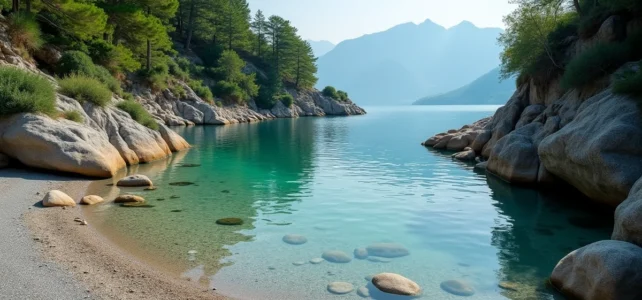
When you arrive on the west bank of Lake Bourget in Savoie, the first instinct is to look for access to the water away from the developed beaches of Aix-les-Bains. The problem is that most of the coves accessible on foot require some effort: unmarked trails, steep descents through vegetation, and sometimes regulations that have changed since the last visit.
Before planning a wild swim this summer, it’s wise to be aware of the new constraints that apply on the lake. They significantly change how to access isolated spots and swim there safely.
See also : Discover the detailed map of highways in France with tolls and rest areas
Swimming Regulations at Lake Bourget: What Changes for Isolated Coves
The new navigation regulation for Lake Bourget imposes a maximum speed of 50 km/h for boats, which is about 27 knots. For those reaching the coves of the wild coast by boat, the journey from the Grand Port now takes a bit longer than before.
Another point that directly concerns swimmers: any swimming beyond 50 meters from the shore requires a fluorescent buoy. This is a requirement, not a recommendation. If you plan to swim from one cove to another or cross a bay, this buoy must accompany you.
See also : Tips and advice for recognizing the age of your vintage Henriot Quimper ceramics
Swimming outside the shoreline band is only allowed with the accompaniment of a boat ensuring the swimmer’s safety. In practice, wild solo crossings to a distant cove are no longer permitted. This framework aims to reduce the risks of drowning, which remain the primary concern of the authorities in Savoie every summer.
One last detail often overlooked: sound devices are now prohibited on board vessels (except for professional boats). For fans of quiet coves, this is good news. The calm of the west bank should be preserved.
You can explore in detail the coves and beaches of Lake Bourget to identify accessible points before heading out.

Wild Coast of Lake Bourget: Access on Foot and Terrain Constraints
The wild coast, on the west bank between Chapelle-du-Mont-du-Chat and Conjux, concentrates the most preserved spots of the lake. But “preserved” also means “difficult to access.”
The trails that descend to the water from the departmental road are steep, often slippery after rain, and lack official signage. You encounter sections where you must hold onto roots to progress. Bringing young children or bulky equipment is quite a challenge.
Equipment to Prepare for an Isolated Cove
- Closed shoes with a non-slip sole for the descent (flip-flops should be avoided on woodland trails)
- Fluorescent buoy if you plan to swim beyond the nearby shoreline
- Sufficient water and supplies, as there are no sales points or fountains on the wild coast
- Waterproof bag to protect your phone and keys on the return trip, which is often more demanding than the descent
Returns vary in terms of access conditions depending on the season. Some paths deteriorate quickly after June storms, and vegetation can close off paths from one year to the next. Checking the trail conditions with the Aix-les-Bains tourist office before leaving remains the best option.
Water’s Edge Trail in Savoie: A Marked Alternative to Wild Coves
For those who want to enjoy nature without playing the explorer, the water’s edge trail offers a developed route along the lake. Recently reopened pontoons allow you to settle by the water in places that were previously inaccessible without a boat.
These pontoons offer a compromise between a developed beach and a wild cove. You find the calm of the west bank without the access difficulties. No fine sand, but wooden platforms at water’s edge, with an unobstructed view of the Bauges massif.
The trail runs alongside areas where swimming is possible in the shoreline band. This is the option to prefer when seeking a nature experience without taking risks on an unmarked trail, especially with family.
Water Quality and Cyanobacteria Vigilance: Check Before Diving
The water of Lake Bourget is generally of good quality, and monitored beaches are subject to regular checks by the ARS. However, isolated coves do not benefit from any displayed health monitoring.
Episodes of cyanobacteria can affect certain areas of the lake, particularly during heatwaves combined with low water renewal in closed bays. Before swimming in an unsupervised cove, you can consult the bulletins from ARS Auvergne-Rhône-Alpes that publish monitoring results during the summer season.
Warning Signs to Look Out For
Water with a greenish surface, foamy deposits on the bordering rocks, or an unusual smell should prompt you not to swim. In an isolated cove, no one will come to put up a prohibition sign.
In case of a heatwave, the authorities in Savoie may issue specific alerts regarding drowning risks and water quality. These alerts also concern unsupervised swimming areas, which includes all the wild coves of the lake.
The developed beaches of Lake Bourget remain the safest choice for worry-free swimming, with water reaching pleasant temperatures between mid-June and mid-September. Wild coves, on the other hand, are for those who are willing to prepare their outing, comply with current regulations, and give up when conditions are not right. Lake Bourget offers both experiences, provided you choose with full knowledge of the facts.