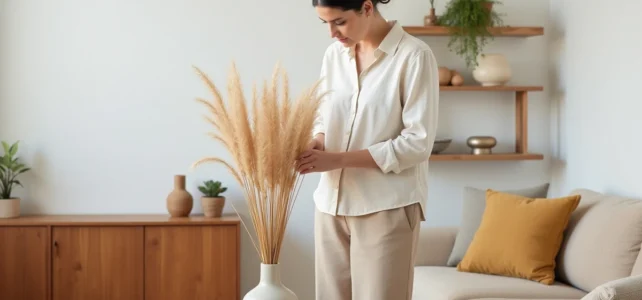
A poorly oriented sofa, a wall color that tires you without knowing why, a hallway that you only pass through: these details shape the perception of an interior much more than the budget you allocate to it. Arranging and decorating your home with style relies less on the accumulation of objects than on a few structural decisions, those that relate to light, proportions, and circulation in each room.
Colors and light: the duo that transforms a room without renovations
Have you ever noticed that a living room seems larger on certain days, depending on the time and the weather? It’s the natural light that alters the perception of volumes, not the actual square footage. Working on decoration without considering lighting is like choosing paint in the dark.
See also : Tips and Inspirations for Successfully Completing Your Contemporary Interior Design Project
Start by observing how light enters each room at different times of the day. A north-facing room receives cold, constant light. Warm shades (ochre, terracotta, golden beige) compensate for this coldness. Conversely, a south-facing room can handle more saturated or darker colors without appearing cramped.
Always test a paint sample on the wall in question, not on a color chart in the store. A bright sage green in the shop can turn into a dull khaki in a windowless hallway. Apply two coats on a square of about thirty centimeters and observe the result in the morning, at noon, and in the evening with the artificial lighting on.
Read also : Tips and advice for recognizing the age of your vintage Henriot Quimper ceramics
For those looking for concrete interior design ideas room by room, you can discover the home section of Coco’s Blog which covers everything from the living room to the bedroom or kitchen.
Artificial lighting deserves the same attention. Multiply light sources at different heights rather than relying on a single central ceiling fixture. A low reading lamp, an indirect floor lamp, and an LED strip behind a piece of furniture create layers of light. The volume of the room changes radically.
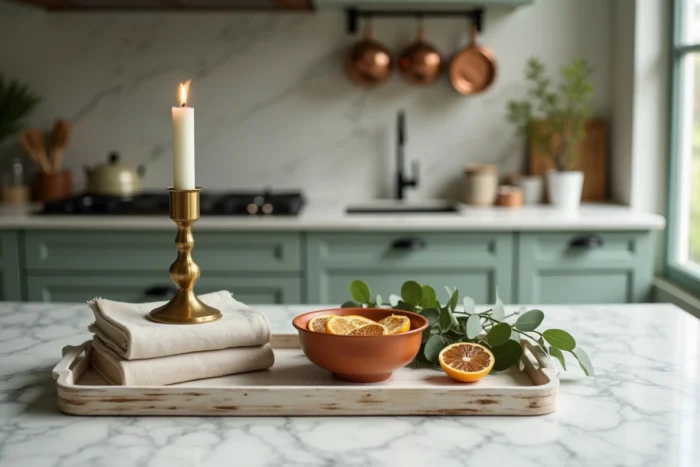
Arranging the living room: circulation and proportions before style
The living room concentrates most of the layout errors. One chooses a sofa because it looks good in the store, without checking if it leaves a comfortable passage around it. The result: a beautiful piece of furniture in a space where you bump into things.
Design the pathways before placing the furniture
Before any purchase, draw on a plan (even a sketch on paper) the paths you take every day: entry to kitchen, sofa to window, door to hallway. Each main passage must maintain at least sixty centimeters of free width. If a piece of furniture encroaches on this area, it will obstruct daily movement, regardless of its style.
An L-shaped sofa facing a wall visually closes off the room. The same sofa, shifted a few dozen centimeters towards the center, creates a circulation space behind it and a sense of openness. This shift costs nothing and profoundly changes the perception of the living room.
Play with the proportions of furniture in the space
A piece of furniture that is too small in a large room makes it feel empty. A piece that is too large in a small living room suffocates it. The proportion between the volume of the furniture and that of the surrounding space matters more than the chosen decorative style.
- In a modestly sized living room, prefer a round or oval coffee table: the absence of corners frees up circulation and softens the visual ambiance.
- Choose low furniture (buffets, consoles) if your ceiling is low, to enhance the perceived verticality of the room.
- A large rug anchors the sofa area and visually structures the living room, even without partitions or additional furniture.
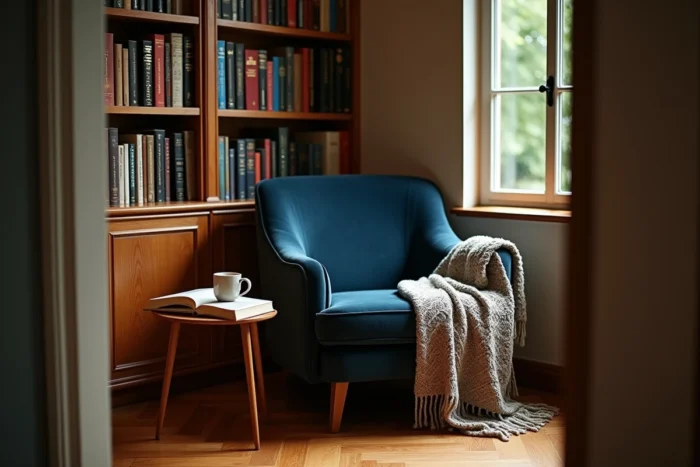
Wall decoration and accessories: the trap of overload
Accumulating frames, mirrors, shelves, and decorative objects on every wall produces the opposite effect of what is intended. Instead of personalizing the space, visual overload tires the eye and gives an impression of disorder.
One strong wall per room is enough to create an identity. In the living room, an accent wall with a few well-spaced frames draws attention. The other three walls remain understated. In the bedroom, the headboard concentrates the decoration. The rest stays calm.
Why this choice? The human brain needs areas of visual rest. If every surface carries a decorative element, the eye doesn’t know where to settle. The empty spaces between objects count as much as the objects themselves.
Decorative accessories: choose by material rather than color
Matching accessories by color sometimes results in an overly coordinated, almost artificial look. A more natural approach is to vary the materials while keeping a limited palette.
- Light wood, raw linen, and matte ceramics combine effortlessly and bring warmth to a contemporary interior.
- Black metal (wrought iron, brushed steel) serves as a common thread between pieces: handles, light fixtures, table legs.
- Textiles (cushions, throws, curtains) are the easiest elements to change with the seasons to refresh the ambiance without touching the furniture.
- Glass and rattan visually lighten a cluttered room, especially in small spaces.
Development tax: the cost of a decorative extension in 2026
Adding a conservatory, a garden office, or a garden room to gain space and style is tempting. Before envisioning the decoration of this new room, it’s important to consider the development tax, which reached a new level on January 1, 2026: 892 euros per square meter outside Île-de-France and 1,011 euros per square meter in Île-de-France.
Any enclosed construction over five square meters triggers this tax. A garden shed converted into a creative workshop or a glass extension to enlarge the living room falls into this calculation. The tax cost radically changes the project’s profitability.
Incorporate this item from the inspiration phase, not at the time of the estimate. A fifteen square meter extension represents a significant tax that adds to the work, materials, and interior design. Sometimes, reorganizing the existing space with a better layout and rethought decoration produces a comparable result, without administrative formalities or additional tax costs.
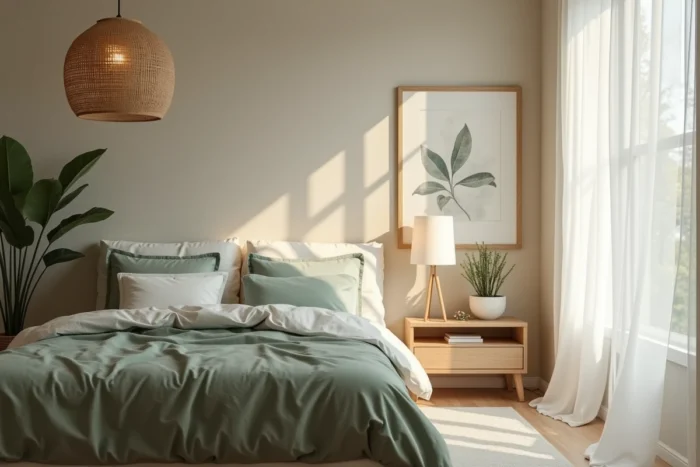
Successful decoration rarely comes down to the last object added. It starts with the light you let in, the circulation you preserve, and the proportions you respect. Style comes afterward, when the functional bases are in place.