
The fortune of Philippe de Villiers is the subject of contradictory estimates, often fueled by a confusion between the economic valuation of Puy du Fou and the personal wealth of its founder. Measuring this fortune in 2026 requires distinguishing between what pertains to the park’s activity, the legal structure that supports it, and the actual income received by the politician and writer.
Puy du Fou and personal wealth: figures not to be confused
The most common shortcut is to attribute to Philippe de Villiers the overall economic value of Puy du Fou. The Vendée park surpassed three million visitors in 2025, and its activity exceeded 300 million euros the same year. These figures, reported by the press, describe the financial health of a business, not the portfolio of an individual.
Puy du Fou is historically supported by a 1901 law association. This status implies that profits are not distributable to a founder. The surpluses generated remain within the structure to finance investments, shows, and international development.
Any estimate that adds the park’s revenue to Philippe de Villiers’ wealth commits a methodological error. To consult more details on Philippe de Villiers’ fortune, one must precisely start from this legal distinction.
| Indicator | What it measures | Link to personal wealth |
|---|---|---|
| Puy du Fou revenue (over 300 M€ in 2025) | Economic activity of the park | No direct link |
| Attendance (around 3 million visitors) | Tourist attractiveness | No direct link |
| Profit of Puy du Fou España (first positive year in 2025) | Profitability of the Spanish subsidiary | No demonstrated direct link |
| Copyright (published books) | Potential personal income | Probable contribution to wealth |
| Executive remuneration (not public) | Salary or similar income | Possible contribution |
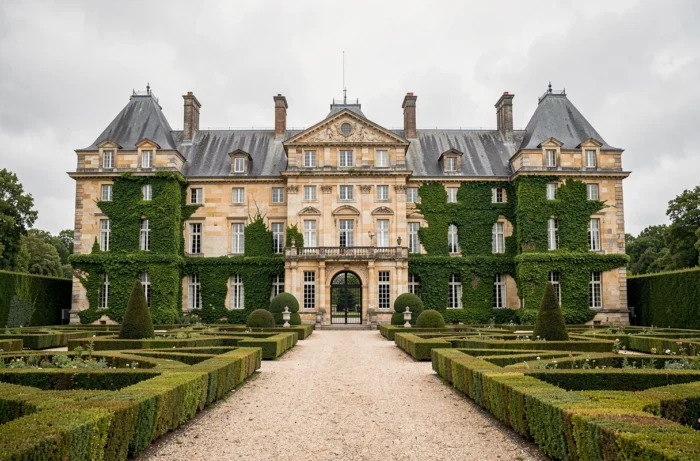
Capital structure of Puy du Fou: why dividends do not exist
The holding company that oversees the commercial activities of Puy du Fou is predominantly owned by the founding association. This structure prevents any dividend payments to an individual, including Philippe de Villiers. The Spanish subsidiary, registered in the Spanish commercial register, also operates as a non-profit entity whose profits are retained within the activity.
Puy du Fou does not pay dividends to Philippe de Villiers. This statement alone summarizes why most online estimates are misleading. They project a valuation multiple on a revenue figure, then attribute it to a man who does not hold shares in the classical sense.
The structure employs around 3,000 employees and mobilizes several thousand volunteers each year. This hybrid model, between an association and commercial operation, has no direct equivalent in the European amusement park sector. It makes any comparison with the wealth of a majority shareholder of a publicly traded park (like those of the Merlin Entertainments group or Compagnie des Alpes) structurally inappropriate.
Author income and public activities of Philippe de Villiers
Philippe de Villiers’ verifiable sources of income fall into two main categories:
- Copyrights from his numerous works. Philippe de Villiers has regularly published essays and historical novels, some of which have been among the bestsellers in France. The royalties received depend on the volumes sold and the publishing contracts, but these amounts are not made public.
- Any remuneration related to his executive roles within the Puy du Fou structures. These amounts, if they exist, are not included in any publicly accessible documents.
- His media appearances and conferences. Philippe de Villiers remains very present in the French audiovisual landscape, with regular appearances on CNews and other channels. The remuneration for these appearances varies depending on the formats and contracts.
No wealth declaration is required from Philippe de Villiers in 2026. Unlike elected officials subject to the obligations of the High Authority for Transparency in Public Life (HATVP), a former elected official without an active mandate does not have to publish his income or wealth. The absence of a public declaration makes any definitive estimate impossible.
Copyrights: a real income but difficult to quantify
The tax regime for authors in France subjects copyright income to income tax in the category of non-commercial profits. The amounts received by Philippe de Villiers depend on the number of copies sold, advances paid by publishers, and any audiovisual rights transfers. Without access to his tax declarations, no serious range can be proposed.

Philippe de Villiers’ fortune in 2026: what remains unverifiable
The amounts circulating online range from a few million to several tens of millions of euros. These considerable discrepancies reveal a complete lack of reliable data. Some sites aggregate satirical or parodic information without identifying it as such, which adds to the confusion.
No institutional source publishes Philippe de Villiers’ personal fortune. Neither the Official Journal, nor the HATVP, nor the commercial registers contain information that would allow for the reconstruction of a total wealth. The only accessible data concerns the legal structures of Puy du Fou, which do not overlap with the personal assets of their founder.
The tax question, particularly the past debates around the ISF and then the IFI, does not provide any more exploitable answers. The taxable wealth for the IFI pertains to real estate, and nothing publicly indicates what real estate Philippe de Villiers owns personally.
Evaluating Philippe de Villiers’ fortune in 2026 thus reveals a paradox: the man is associated with one of the most visible tourist and cultural successes in France, but the legal model he has chosen for Puy du Fou precisely prevents deriving a wealth estimate from it. The only documentable income, the copyrights, constitute a certain but publicly unquantifiable source. Any numerical estimate that does not rely on official documents is speculative.